Appearance
Dynamic programming
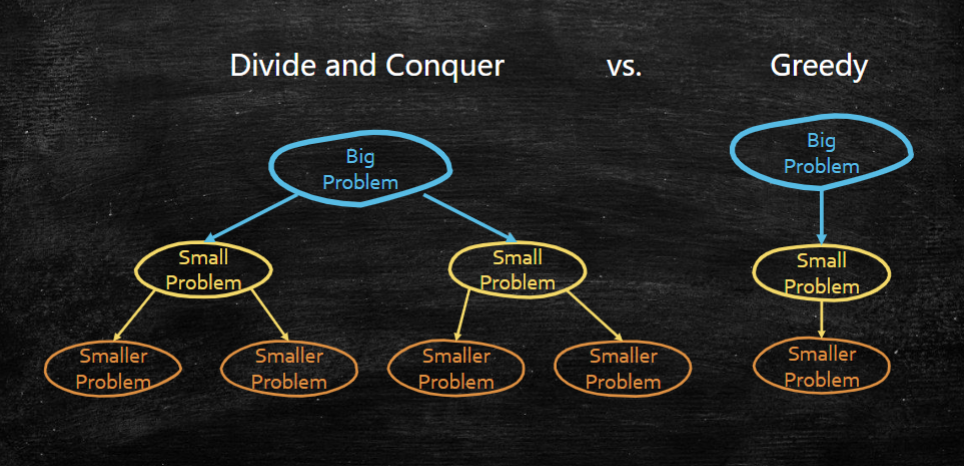
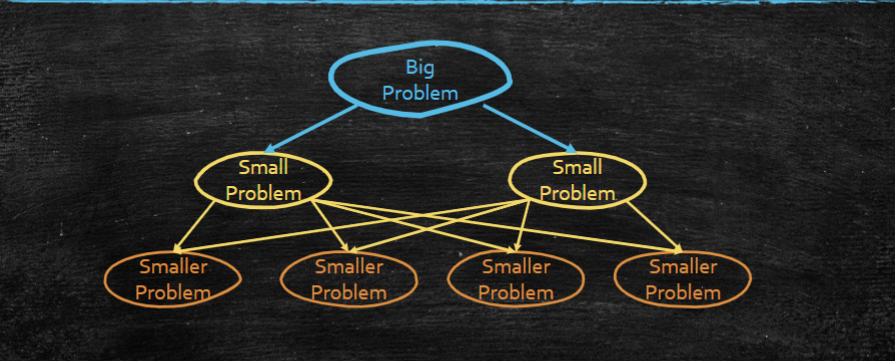
Base case: Fibonacci recursion
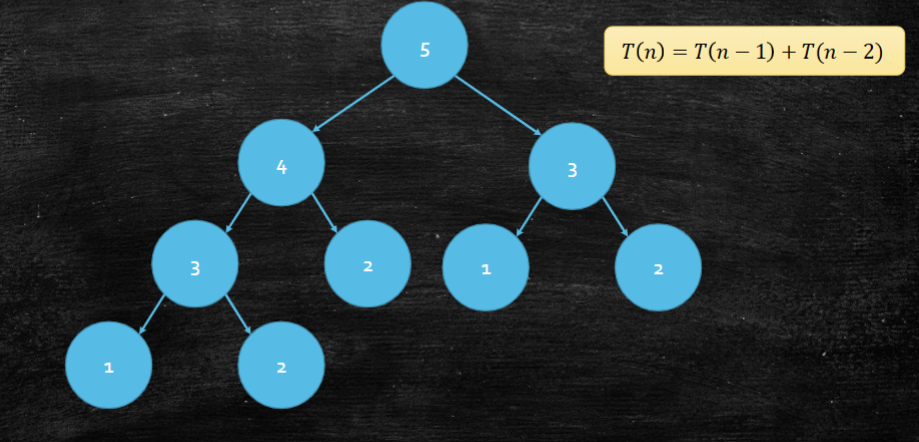 动态规划最基本的思路:记忆化搜索, 重复的子问题将结果存储起来,避免重复计算。Fibonacci递归优化之后: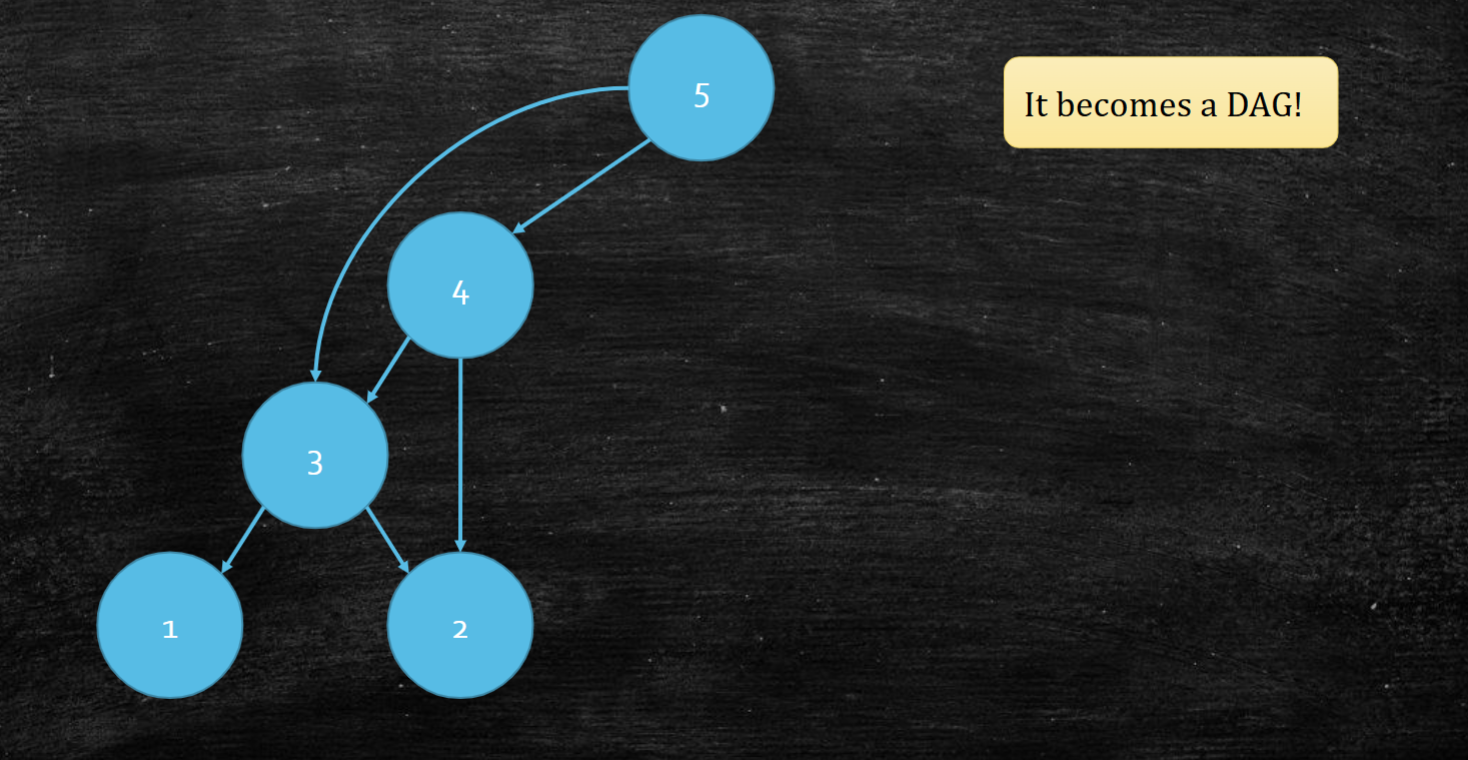
Guideline for DP design
根据上面的子问题记忆化优化之后,我们可看到,DP的流程已经被简化成了一个DAG,接下来只需要将边逆向,按照拓扑序从小问题开始计算即可。
1. 设计 递归 算法
2. 合并相同子问题
3. 得到合并后得到的DAG, 根据拓扑序计算子问题
Shortest Path in DAG
递归描述
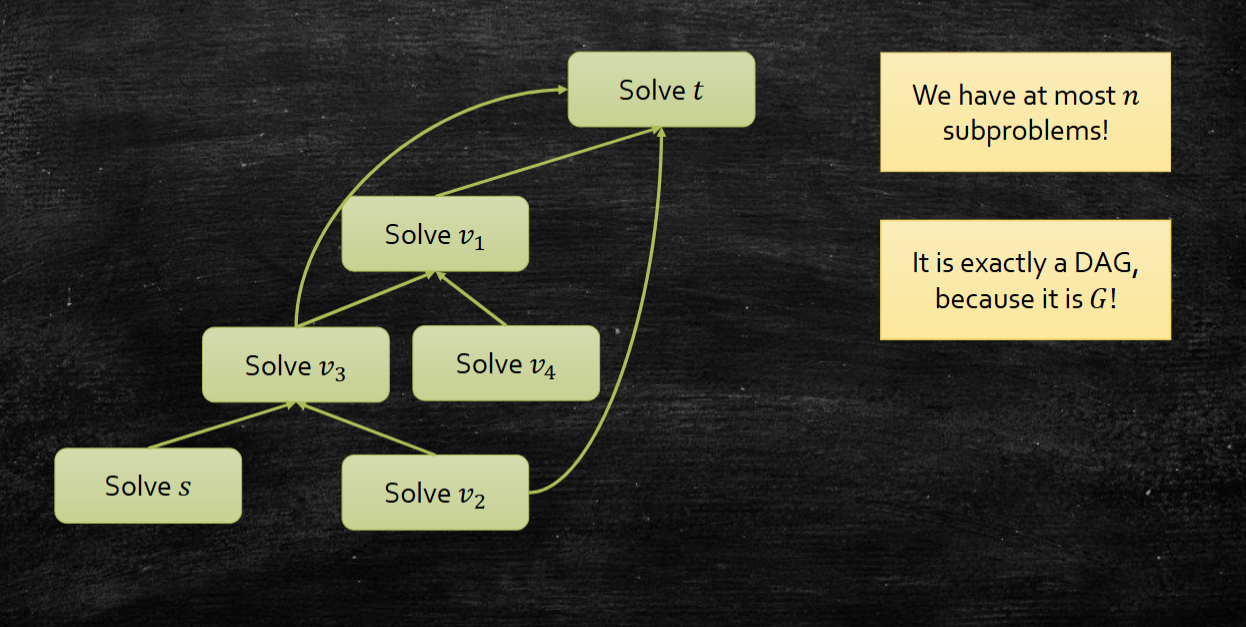
text
// Input: DAG G = (V, E), source s, edge weight w(u, v)
// Output: dist[v] = shortest distance from s to v
Function DAG_Shortest_Path(G, s):
    order = TopologicalSort(G)

    for each v in V:
        dist[v] = infinity
        pre[v] = NIL
    dist[s] = 0

    for each u in order:
        if dist[u] == infinity:
            continue
        for each edge (u, v) in E:
            if dist[u] + w(u, v) < dist[v]:
                dist[v] = dist[u] + w(u, v)
                pre[v] = u

    return dist, pre
这里的 DP 状态就是 dist[v]。由于图本身是 DAG,拓扑序保证在处理一条边 dist[u] 已经是最终值,所以每条边只需要被松弛一次。
Time Complexity:
Longest increasing subsequence 最长上升子序列
Input: a sequence
Output: the longest increasing subsequence (LIS)
递归角度:先枚举 LIS 的最后一个元素。如果 LIS 以
定义状态:
为了统一边界,可以加入一个虚拟起点:
递推式:
最终答案:
也可以把它看成 DAG 上的最长路:如果
text
// Input: sequence a[1..n]
// Output: length of the longest increasing subsequence
Function LIS(a):
    a[0] = -infinity
    lis[0] = 0

    for i from 1 to n:
        lis[i] = 1
        pre[i] = NIL
        for j from 0 to i - 1:
            if a[j] < a[i] and lis[j] + 1 > lis[i]:
                lis[i] = lis[j] + 1
                pre[i] = j

    ans = max_{1 <= i <= n} lis[i]
    return ans, pre
Time Complexity:
Edit Distance
How many operations are needed to change one string to the other? Allowed operations:
- insertion
- deletion
- replacement
可以写成等价操作:
- alignment: 插入空格使得两个string长度一样
- insertion: 将空格处写成character
- deletion: 将char写成空格
- replacement: 重写char
设两个字符串分别为
定义状态:
递推时只看最佳 alignment 的最后一列,有三种情况:
text
// Input: strings X[1..m], Y[1..n]
// Output: edit distance between X and Y
Function Edit_Distance(X, Y):
    m = length(X)
    n = length(Y)

    for i from 0 to m:
        ED[i][0] = i
    for j from 0 to n:
        ED[0][j] = j

    for i from 1 to m:
        for j from 1 to n:
            replace = ED[i - 1][j - 1]
            if X[i] != Y[j]:
                replace = replace + 1

            insert = ED[i][j - 1] + 1
            delete = ED[i - 1][j] + 1
            ED[i][j] = min(replace, insert, delete)

    return ED[m][n]
表格从左上到右下填,等价于在 ED[i][j] 的子问题 DAG 上按拓扑序计算。
Time Complexity: